Tubeless vs Tube Tyres: The Difference and Basic Tyre Care Every Owner Should Know
Understand tubeless and tube tyres, which suits Indian roads, and the simple tyre care habits that keep you safe and save money.
Page 2 of 3
Reading tread and spotting damage
Tread depth decides how well your tyres clear water and grip the road. As it wears down, braking distances grow and the risk of skidding on wet roads rises sharply.
The simple tread check
- Look for the small raised bars set into the grooves — these are wear indicators. When the tread wears level with them, the tyre is finished.
- As a rough guide, replace tyres once the tread drops to around 2 mm; do not wait until it is bald.
- Check across the whole width — uneven wear points to a deeper problem.
Damage that means stop now
Run your hand over each tyre once a month and look for:
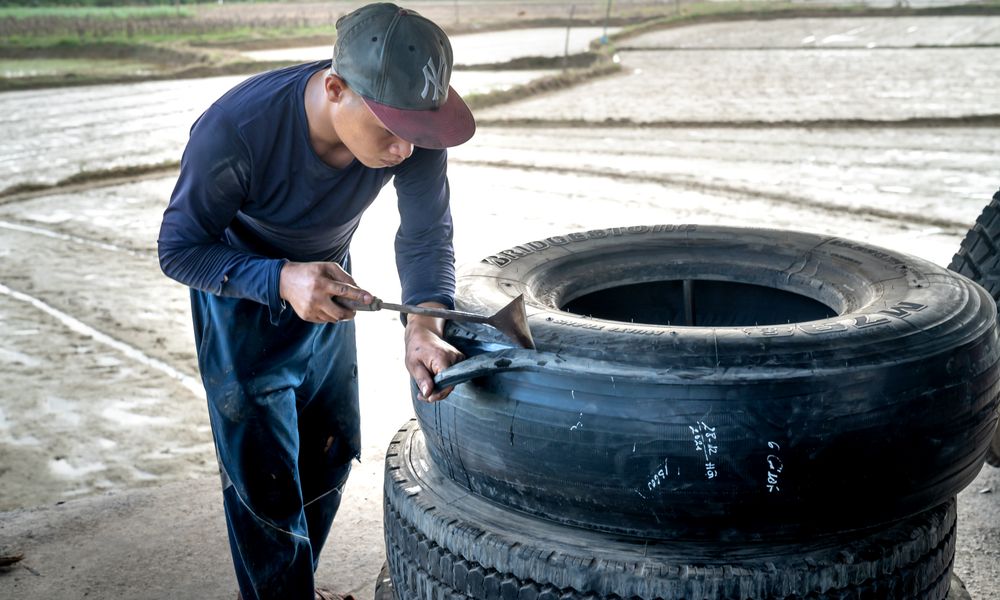
- Bulges or blisters on the sidewall — internal damage from a pothole, and a blowout risk. Replace immediately.
- Cracks in the rubber from age and sun exposure, common on cars that sit outdoors.
- Cuts, nails or embedded stones.
- Tyres older than about five to six years, even if the tread looks fine — rubber hardens and loses grip with age.
Rotation, alignment and balancing
These three services are cheap insurance that make tyres last longer and the car drive better.
- Rotation: Swapping tyres between positions every 8,000-10,000 km evens out wear, since front and rear tyres wear differently.
- Wheel alignment: If the car pulls to one side or the steering sits off-centre, get the alignment checked. Bad alignment chews through tyres on one edge. Our roads, with their potholes and broken edges, knock alignment out often.
- Wheel balancing: Vibration through the steering at highway speed usually means a wheel needs balancing. Left alone, it causes patchy wear and tires you out on long drives.